Blog

Hypothesis Driven Software Development

Coding Laptop Screen

While hypothesis-based testing is natural for most scientific work, it doesn’t come as easily nor is it as widely used in the software development space. One of the reasons may be the rise of Agile and the “fix it faster” culture. There is little time to document the systematic thought processes that takes place in programmers’ heads. However, it is exactly this journey in the thinking process that moves from question or idea to a proposed solution and implementation, then testing and results analysis that AusIndustry want to see as evidence for the R&D Tax Incentive.

Applying the scientific process to software development

It is not that difficult to adopt a scientific thinking process to traditional and disruptive software-based products, processes or services (the three generic avenues through which R&D can be claimed). For organisations that use a more traditional, Waterfall methodology, the scientific methodology fits in neatly in that the higher emphasis on early documentation can be used to help record various hypotheses about functionality, performance or other measurable attributes related to the project in question.

For organisations using an Agile methodology, a move towards the Lean model of Build-Measure-Learn will ensure there is enough scientific rigour in the methodology adopted to be able to demonstrate that the project met AusIndustry’s eligibility criteria.*

Creating hypotheses and incorporating IT projects

A Hypothesis-Driven-Development approach to IT-based projects not only helps in meeting the eligibility criteria for claiming the R&D Tax Incentive, it ensures that companies gain validation of ideas relatively quickly.

For startups, the questions about whether the functionality offered will meet particular metrics will form broad, overarching hypotheses. Will my product solve a current problem or do it better than existing products? Will I be able to scale as quickly as I can if I adopt technology x? These questions and more can be answered through several rounds of prototyping using the Lean model. To claim the R&D tax incentive (provided that the offering is novel on a worldwide basis), these questions can (and should) be drilled down further into specific technical questions e.g. “The <<novel, newly created function>> will calculate < > within x seconds.” Metrics ranging from memory utilisation, accuracy in results, latency and a range of other factors are often tested and will form good measurable outcomes for the questions asked in the hypothesis statements.

In a more established organisation, there may be templates and methodologies that are followed in developing new products, processes or services. With minor tweaks to these processes, you can adopt a style of thinking which will identify the most risky assumptions, conduct tests on them and form conclusions.

Gathering test data and forming conclusions

Keeping supporting documentation and evidence of tests conducted is an essential criterion for claiming the R&D tax incentive. Fortunately, the hypothesis-driven-development (HDD) approach lends itself well to capturing test results and reaching conclusions. Agile companies often use a concept of user stories to validate requirements and planned functionality. HDD asks that you develop acceptance criteria for each story. To conduct strong qualitative and quantitative result analyses and therefore validate assumptions (hypotheses) with greater certainty, statistical hypothesis testing is recommended.

If your business is undertaking R&D, call Access RnD Tax Solutions for an obligation-free discussion on the eligibility of your projects and for support in setting up systems to capture contemporaneous evidence in the above format. Call us today on 1800 RnD TAX(1800 763 829).

*Note that the entire project will not usually be eligible to meet the R&D tax incentive criteria. It will come down to the novel products, processes or services developed to which there was no answer to in the public domain and involved significant technical risk.

Some helpful tools and techniques


Posted in R&D

Small business grant

Working around a table

The NSW government is giving small businesses in NSW a grant of $2000 if they employ new full-time, part-time and casual workers in NSW.

To be eligible, the business needs to:

  • Have an active Australian Business Number (ABN)
  • Be exempt from the payroll tax for a financial year

In addition, the employment of the person must:

  • Fill a new job.
  • Have started after 1 July 2015 and before 1 July 2019.
  • Be maintained for 12 months.
  • Mean that the number of your NSW FTE employees prior to hiring them increases and the number is maintained over a 12-month period.
  • Mean the role is performed wholly or mainly in NSW.

The claim needs to be lodged within 60 days after the 12-month anniversary date.

Businesses can apply online at http://www.revenue.nsw.gov.au/grants/sbg/online

For further information, please visit http://www.revenue.nsw.gov.au/grants/sbg

NSW-Israel Research & Technological Innovation Program

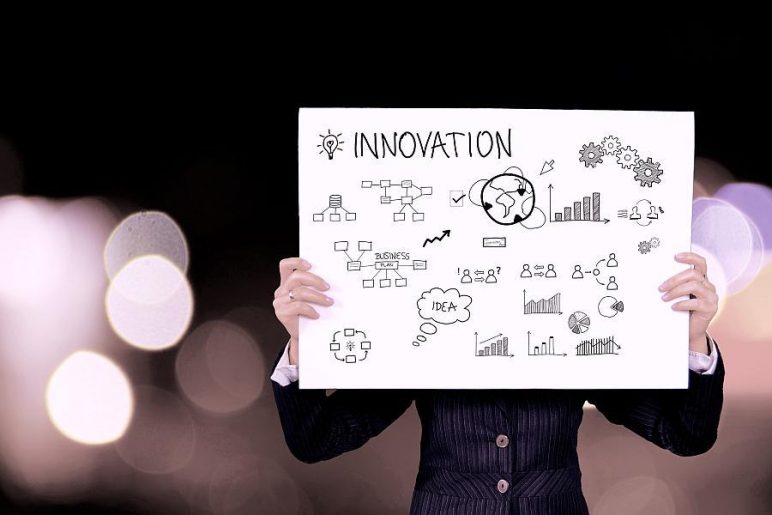
Innovation Poster

The NSW Government has launched a NSW-Israel joint Research & Development (R&D) program, where businesses based in NSW, partnering with an Israeli business will have access to grants of up to $250,000 to cover R&D expenses. The grant is intended to provide 50% of a project’s costs, where the other 50% will need to be covered by the NSW applicant or a third party.

Eligibility criteria

Applicants need to meet the following eligibility criteria:

  • There must be at least one NSW-based commercial organisation
  • There must be at least one Israel-based commercial organisation
  • They both need to be separate legal entities
  • They must collaborate to conduct R&D on an innovative technological product for commercialisation on a global scale.

Further eligibility criteria are available at www.industry.nsw.gov.au/israelresearchproject

There is help available to NSW-businesses to find a suitable Israeli partner from the NSW Department of Industry’s online portal.

Priority areas

Although all NSW-businesses who partner with an Israeli entity are eligible to apply, there are several industry fields that the government will give priority to and contribute an additional 10% of NSW total R&D project costs (up to AUD 250,000 per project):

  • Projects based in regional and rural areas of NSW – i.e. outside metropolitan Sydney, Wollongong and Newcastle.
  • Startups or high growth businesses
  • Projects targeting cybersecurity, water management, agri-technology, tourism technology and international education technology.

Points will be given to each criterion within the assessment process including the:

  • Technological aspect
  • Business/economic aspect
  • Company’s capabilities
  • Quality of cooperation
  • Completion and clarity of application
  • Priority sectors (for NSW applicants only)

For Israeli partners, points against the assessment criteria will be set out on the Israel Innovation Authority’s website.

The assessment process has two stages. In stage one, bilateral application forms will be assessed by NSW and Israel. Applications meeting the eligibility criteria will move on to stage two when individual application forms are assessed. Further details can be found in the fact sheet.

Key dates:

Stage 1 applications close 18 December 2017, with eligibility assessment completed by 4 February 2018. Stage 2 applications open 17 February 2018.

The R&D Tax Incentive – Supporting Medical, Health and Life Sciences Research

Medical Research

Are you in the medical, health or life sciences sector? Is your company developing cutting edge technology?

If you answered yes, then you’re in good company! Registered expenditure for the R&D Tax Incentive scheme on Medical, Health and Life Sciences (MHLS) has grown by 50% from 2012 to $1.6b in 2015. Most research fields in the sector are growing, even while R&D expenditure in other sectors has decreased. Clinical Sciences is leading the way as the fastest growing field in the MHLS sector.

This increased R&D in the health and life sciences sector indicates a strong future for medical research in Australia.

Medical, Health and Life Sciences – a broad field

MHLS is a broad field covering biotechnology, medicinal drugs and surgical equipment as examples. Data indicates that the strongest R&D growth is in small companies (turnover of less than $500,000) and very large companies (turnover of more than $50 million), with most situated in NSW or Victoria.

Over 1200 businesses working in the MHLS sector receive support from the R&D Tax Incentive, and your business could be eligible for these benefits too.

MHLS Research – what is eligible under the R&D Tax Incentive?

Whether you’re already registering your R&D or you’re new to the process, AusIndustry has published specific guidance for companies working in biotechnology that can help you understand how to claim the R&D Tax Incentive and whether your R&D is eligible.

Included in this guidance are hypothetical examples of firms developing products and processes across the MHLS sector. The guidance document discusses what is considered eligible R&D and provides examples of what can be used as supporting evidence.

One hypothetical firm, Encapsulate, tested a compound to determine its suitability as a therapeutic agent for Parkinson’s disease. Their test work was an eligible core R&D activity because:

  • the binding and transport characteristics of their compound had not been tested before so the work was carried out for the purposes of generating new knowledge.
  • the results of the tests could not be predicted or known without conducting the test work.
  • the testing was driven by hypotheses and followed a systematic and scientific progression of work.

Encapsulate wrote an R&D plan before starting the tests which included hypotheses, methods and evaluations that would be carried out. This type of evidence is not only useful to record ideas, it is a requirement of the R&D Tax Incentive that companies keep evidence of their R&D work.

Another hypothetical company, Biofnatics, developed an improved biodegradable coronary heart stent. This helpful video discusses why their clinical trials were an eligible core activity and what type of work carried out overseas is eligible to be claimed under the R&D Tax Incentive.

AusIndustry also showcases customer stories from Australian firms that have received support from the R&D Tax Incentive to develop novel products in the MHLS field.

If your business is conducting R&D in the MHLS sector why not contact Access RnD Tax Solutions to talk about how the R&D Tax Incentive can support your work? Contact us today on +61 2 9241 5900.

Posted in R&D

What start-ups need to know about the R&D tax incentive

Business Idea Chalkboard

So you’ve created a shiny new widget, after months of R&D and hard work. Great! You may well become the next ‘disruptor’- an Uber or Netflix service.

Of all the grants and tax incentives that are available for start-ups, you may be convinced that the Government’s R&D tax incentive is especially applicable to you as you are disrupting your niche. However, as the following checklist points out, being a startup and disruptor doesn’t automatically qualify you for the R&D tax incentive.

Align your definition of R&D and the Government’s

The Government requires that you have conducted at least one ‘Core’ R&D activity to be eligible to register for the R&D Tax incentive:

As described on business.gov.au, Core R&D activities are experimental activities:

  • whose outcome cannot be known or determined in advance on the basis of current knowledge, information or experience, but can only be determined by applying a systematic progression of work that:
    • is based on principles of established science; and
    • proceeds from hypothesis to experiment, observation and evaluation, and leads to logical conclusions; and
  • that are conducted for the purpose of generating new knowledge (including new knowledge in the form of new or improved materials, products, devices, processes or services).

Tick off the following when assessing eligibility

  1. New knowledge – addressing the first requirement, it is not enough to offer a ‘new’ service, product or process. The work you have done to produce it must be novel on a worldwide basis i.e. there was no ready answer to the problems and challenges you faced in the course of your R&D in the public domain. Further to this, the work must have been conducted for the primary purpose of developing new knowledge e.g. evaluating whether one type of existing algorithm will be more efficient than another (when the answer to this can be deduced from existing knowledge) is not eligible.
  2. Experimentation – you need to have applied principles of established science to demonstrate the progression of an idea from hypothesis to experiment, then observe results and make conclusions that would either prove or disprove your original hypothesis. Many startup environments follow the Agile methodology where a ‘do it first and document later’ mentality is followed. However, to be eligible for the R&D tax incentive, there is a requirement that you keep contemporaneous proof of work conducted. Use task management systems and processes designed to help startups to your advantage. For example, create a task category called ‘R&D’ in your task management system to record your ‘I’m just trying something out’ moment (it doesn’t even have to be written, it could be an audio of your thought process!) Check out other acceptable forms of evidence.
  3. Technical risk – there must be an element of technical risk or uncertainty in the experimental work you undertook to uncover new knowledge. This means you could not predict in advance whether the experiment would produce the outcome you expected. In other words, you could not know from available knowledge that your hypothesis would be proven correct – there was a significant chance that the experiment would be a failure. For example, integration efforts e.g. building APIs are generally not considered to be technically risky because a) people know how to do this – it is an operational activity rather than R&D, and as such, it carries a very low risk of failure when carried out by a professional competent in this field and b) it is unlikely that new knowledge will be produced by performing such a well understood task.

Given the amount of creativity and innovation apparent in Australian start-ups, it is no wonder that 22.6% received the R&D tax offset in 2016.

Give us a call at Access RnD today to see if you can become one of these start-ups to take advantage of the Government’s generous grant.

Posted in R&D

Top 6 accepted pieces of evidence

Pile of documents

Evidence, Evidence, Evidence! If there was ever an equivalent catchphrase in the R&D Tax Incentive to real estate’s ‘Location, Location, Location!”, that would be it.

For a lot of clients, finding evidence of the R&D work they are undertaking can be like a treasure hunt. Find a great piece of evidence, and you’ve hit treasure. Not knowing what constitutes treasure or not having a map that can lead you to various pots of gold can result in a much more frustrating activity.

Fortunately, here at Access RnD, we have rounded up a few pointers on how to go about your treasure hunt and what it is you should be on the lookout for:

  1. Reports – any kind of written up report on a test conducted. Formal test case results, inklings of how certain factors may influence the experiment, raw data measured from devices and equipment are all great examples of test reports.
  2. Pictures – pictures do tell a thousand words in the R&D application as well! If you snapped your product or process in action, include it. If you took photos of white board drawings depicting your experiment designs, that will work too.
  3. Videos – as with photos, a video recording of the product in action (and if you can do a voiceover while it is in progress), would be ideal. Some concepts are really difficult to explain and just showing what your experiment is about in the form of a video can eliminate ambiguity.
  4. Broken prototypes – sometimes things don’t go to plan and you end up with a busted prototype. This is actually great from an R&D claim perspective because it denotes failure – which demonstrates the technical risk you are encouraged to talk about in your application. Broken pieces of hardware, outcomes of a rogue software process, foul tasting food items…who knew all those items that were destined for the rubbish heap could actually be useful?
  5. Project documentation – whether it be meeting minutes, project plans, memos, voice notes, staff timesheets, run sheets or production sheets, these will often demonstrate that discussions regarding R&D work took place and often will contain details of any testwork conducted.
  6. Social media/marketing material – look through your previous social media posts, YouTube videos or other marketing material you may have created, including whitepapers, blogs or product descriptions. Often, these can form great examples of supplementary contemporaneous evidence.

Not only will having some of the above satisfy the eligibility criteria for applying for the R&D Tax Incentive, it will allow us to tell a fluent, cohesive R&D story.

Talk to us at Access RnD today to find out how we can help you setup and maintain effective record keeping systems.

Posted in R&D

IP NOVA – helping you assess your R&D novelty

Idea in a notepad

Having that light bulb moment is a great feeling, isn’t it? You think you have finally found a novel, interesting way to solve a particular problem. But how do you know that someone else hasn’t had this same idea before? More importantly, if you are planning to take advantage of the Government’s R&D tax incentive scheme, demonstrating the idea, service or product’s novelty on a worldwide basis is a critical eligibility criteria.

Patent searches – R&D

Here’s where as part of good R&D planning, patent searches become really important. IP Australia’s newly released IP Nova tool is a great, visual way to explore registered patents, trademarks and plant breeder rights.

The IP Nova search engine makes it easy to search by keyword and visually display the various links between resulting matching entities. In this way, other patents or trademarks associated with the keyword (but perhaps addressing a different aspect of it) can be explored in greater detail. When trying to demonstrate that your R&D is unique and thus eligible for R&D tax initiative, this will no doubt come in handy.

A ticket to deeper exploration and growth

Other advantages to the information IP Nova provides include statistics – such as application of patents or trademarks for something to do with the keyword by industry or a timeline of such applications. Being aware of such information can help entities planning their own R&D about the level of interest in their field and the number of ‘competitors’, as such. On the flip side, you could perhaps find collaborators to work with.

Potential infringement alerts and establishing protection strategies

Alternatively, if you have already developed your novel idea and have a patent granted for it, you might be in need of IP protection strategies. In particular, if you are applying for the Federal Export Market Development Grant (EMDG) programme, there could be expenses with regard to securing and applying for IP protection programmes. While trademark and patent attorneys have their own systems setup to monitor and brief you about any possible infringements, the IP NOVA tool provides yet another avenue through which they can provide their services to you.

To help optimise your preparations and maximise your entitlements from the R&D Tax Incentive and the Export Market Development Grant, the team at Access RnD is standing by to be of service. Feel free to contact us at on 02 9241 5900.

Posted in R&D