Round 3 – Applications for 2023/24 open 15th March and close 14th April 2023 Grant amounts will be determined by Austrade once applications have been received and processed. See our EMDG page for more information
Lorem ipsum

Lorem ipsum dolor sit amet, consectetur adipiscing elit, sed do eiusmod tempor incididunt ut labore et dolore magna aliqua. Ut enim ad minim veniam, quis nostrud exercitation ullamco laboris nisi ut aliquip ex ea commodo consequat. Duis aute irure dolor in reprehenderit in voluptate velit esse cillum dolore eu fugiat nulla pariatur. Excepteur sint occaecat cupidatat non proident, sunt in culpa qui officia deserunt mollit anim id est laborum.
Lorem Ipsum
Lorem ipsum dolor sit amet, consectetur adipiscing elit, sed do eiusmod tempor incididunt ut labore et dolore magna aliqua. Ut enim ad minim veniam, quis nostrud exercitation ullamco laboris nisi ut aliquip ex ea commodo consequat. Duis aute irure dolor in reprehenderit in voluptate velit esse cillum dolore eu fugiat nulla pariatur. Excepteur sint occaecat cupidatat non proident, sunt in culpa qui officia deserunt mollit anim id est laborum.
Lorem Ipsum
Lorem ipsum dolor sit amet, consectetur adipiscing elit, sed do eiusmod tempor incididunt ut labore et dolore magna aliqua. Ut enim ad minim veniam, quis nostrud exercitation ullamco laboris nisi ut aliquip ex ea commodo consequat. Duis aute irure dolor in reprehenderit in voluptate velit esse cillum dolore eu fugiat nulla pariatur. Excepteur sint occaecat cupidatat non proident, sunt in culpa qui officia deserunt mollit anim id est laborum.
Setting Records with the Access RnD North Sydney Bears
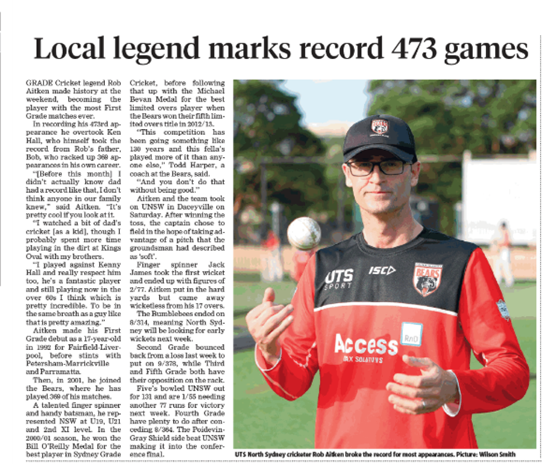
Congratulations to Rob for making history as the player with the greatest number of First Grade match appearances ever at a staggering total of 473!
Early Stage Business Funding
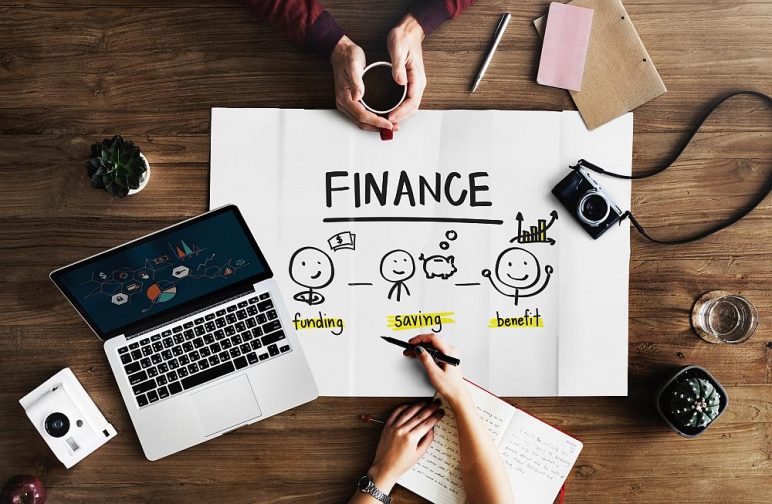
How much do you know about early stage business funding, especially when you need to research and develop your product/service, and develop a market?
Take this quick quiz and see if you should attend our funding workshop.
The email address will be used to send the answers to you and keep you posted on future workshops. You can unsubscribe anytime and the email address won’t be shared with any other organisation.
[Form id=”6″]
Want to learn more?
Come to a workshop hosted by Catapult Business Accelerator featuring our very own Dave Sammut which will cover some aspects of the funding ecosystem, with a particular emphasis on the R&D Tax Incentive and the Export Market Development Grant. These programs have the advantage that they provide certainty of outcome, and you will have the opportunity to talk privately with an expert about your own circumstances.
More details and to register:
Contact us if you want to have a confidential discussion about business funding and commercialisation, especially the R&D Tax Incentive and the Export Market Development Grant.
Tip: R&D Testable Hypothesis

When claiming expenses as a core activity for the R&D Tax Incentive, AusIndustry requires businesses to show examples of their experimental work. Demonstrating that the work follows the scientific method (another requirement for the R&D Tax Incentive) starts with a testable hypothesis.
What is a testable hypothesis? This is a question some businesses find difficult to answer.
A hypothesis is different to an aim or a goal. These often describe the reasons for test work, or the final desired outcome of the tests. The hypothesis is a single idea that can be proven true or false by running a test. It typically includes an action and an expectation – “if I do or change this, then the result will be this”.
The type of test will vary depending on whether a product, process or service is being tested. It could involve running a new software program to see if it gives the expected outputs, or seeing if a new cleaning agent cleans as well or as fast as predicted.
Running the experiment will show whether the expectation in the hypothesis was achieved or not. Remember, AusIndustry is also interested in examples where the hypothesis was proven wrong – failed experiments illustrate the technical risk in a company’s R&D activities.
We’re all R&D scientists!
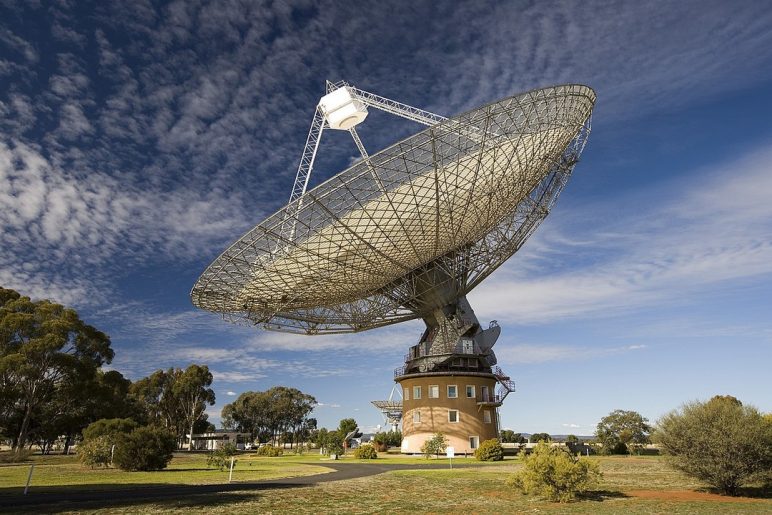
It’s National Science Week!
Celebrating science and technology, National Science Week brings awareness and inspiration to a wide audience from children to the young at heart. Whilst many events are held by schools, universities and museums, science and technology can be found all around us in businesses and activities of all kinds.
So, what is “science”? Wikipedia notes: “Science is a systematic enterprise that builds and organizes knowledge in the form of testable explanations and predictions about the universe.”
The scientific method describes the procedure that has characterised natural science since the 17th century, consisting in systematic observation, measurement, and experiment, and the formulation, testing, and modification of hypotheses.
“Technology” also isn’t limited to WhatsApp software, iPhones, and Amazon Echos. Google’s dictionary defines technology as the application of scientific knowledge for practical purposes, especially in industry.
Traditionally, we see science as things like mathematics, chemistry, physics, medical research, people in lab coats, chemical beakers and rocket scientists. But science forms the backbone of all kinds of research and development (R&D). It is the basis of how most of us learn. From kids figuring out how things work: Dog is sleeping (observation). What happens if I poke the dog (question)? It might wake up (hypothesis). Poke dog (experiment). Did it wake up? No. (Analyse result.) Poke harder, dog wakes up. New knowledge remembered for future dog waking needs; to the Aussie scientists (Ian Frazer, along with his colleagues) who developed the vaccine designed to prevent HPV infections (Human Papilloma Virus) and cervical cancer; the method is basically the same.
As the question and solution becomes more complex, there is a greater benefit of having good records. Children are taught to write down their scientific endeavours on a piece of paper (such as the dog poking experiment), and pharmaceutical research teams may have dedicated documentation specialists and software.
Keeping records, in any form, helps us work systematically through problems and contributes to the reporting of the journey to others, be it the kid next door who also has a dog, or in giving the vaccine recipe to the manufacturer.
Record keeping is also a key requirement for claiming expenditures in the Australian Government’s R&D Tax Incentive scheme. Following the scientific method, a claimant needs to record their activities in developing new knowledge. That new knowledge needs to be new on a global basis, so dog poking might be new to you, but isn’t new globally. It’s been done before!
What’s absolutely fascinating, however, is the breadth of what can be eligible R&D activity in terms of the R&D Tax Incentive. Not all R&D needs to be done by lab coat wearing scientists looking through microscopes, or concocting mixtures in glass beakers. Movie famous back shed inventor, Doc Emmett Brown from, “Back to the Future” conducted R&D (though I suspect his documentation was fairly poor). So too did the Sydney programmers who invented what is now known as Google Maps.

Above – Doc Emmett Brown – Back to the Future
From software development, advanced manufacturing techniques, and new product development (digital and traditional), to medical devices, medicines and everything in between, R&D is done by all types of people at all kinds of scale.
Everyone can science. Science can happen anywhere. Keep records, and maybe the team at Access RnD can help you access the R&D Tax Incentive.
Happy Science Week!
Written by Darren Wu. Originally posted on LinkedIn.
Hypothesis Driven Software Development

While hypothesis-based testing is natural for most scientific work, it doesn’t come as easily nor is it as widely used in the software development space. One of the reasons may be the rise of Agile and the “fix it faster” culture. There is little time to document the systematic thought processes that takes place in programmers’ heads. However, it is exactly this journey in the thinking process that moves from question or idea to a proposed solution and implementation, then testing and results analysis that AusIndustry want to see as evidence for the R&D Tax Incentive.
Applying the scientific process to software development
It is not that difficult to adopt a scientific thinking process to traditional and disruptive software-based products, processes or services (the three generic avenues through which R&D can be claimed). For organisations that use a more traditional, Waterfall methodology, the scientific methodology fits in neatly in that the higher emphasis on early documentation can be used to help record various hypotheses about functionality, performance or other measurable attributes related to the project in question.
For organisations using an Agile methodology, a move towards the Lean model of Build-Measure-Learn will ensure there is enough scientific rigour in the methodology adopted to be able to demonstrate that the project met AusIndustry’s eligibility criteria.*
Creating hypotheses and incorporating IT projects
A Hypothesis-Driven-Development approach to IT-based projects not only helps in meeting the eligibility criteria for claiming the R&D Tax Incentive, it ensures that companies gain validation of ideas relatively quickly.
For startups, the questions about whether the functionality offered will meet particular metrics will form broad, overarching hypotheses. Will my product solve a current problem or do it better than existing products? Will I be able to scale as quickly as I can if I adopt technology x? These questions and more can be answered through several rounds of prototyping using the Lean model. To claim the R&D tax incentive (provided that the offering is novel on a worldwide basis), these questions can (and should) be drilled down further into specific technical questions e.g. “The <<novel, newly created function>> will calculate < > within x seconds.” Metrics ranging from memory utilisation, accuracy in results, latency and a range of other factors are often tested and will form good measurable outcomes for the questions asked in the hypothesis statements.
In a more established organisation, there may be templates and methodologies that are followed in developing new products, processes or services. With minor tweaks to these processes, you can adopt a style of thinking which will identify the most risky assumptions, conduct tests on them and form conclusions.
Gathering test data and forming conclusions
Keeping supporting documentation and evidence of tests conducted is an essential criterion for claiming the R&D tax incentive. Fortunately, the hypothesis-driven-development (HDD) approach lends itself well to capturing test results and reaching conclusions. Agile companies often use a concept of user stories to validate requirements and planned functionality. HDD asks that you develop acceptance criteria for each story. To conduct strong qualitative and quantitative result analyses and therefore validate assumptions (hypotheses) with greater certainty, statistical hypothesis testing is recommended.
If your business is undertaking R&D, call Access RnD Tax Solutions for an obligation-free discussion on the eligibility of your projects and for support in setting up systems to capture contemporaneous evidence in the above format. Call us today on 1800 RnD TAX(1800 763 829).
*Note that the entire project will not usually be eligible to meet the R&D tax incentive criteria. It will come down to the novel products, processes or services developed to which there was no answer to in the public domain and involved significant technical risk.
Some helpful tools and techniques
- Github
- The Scientist library – https://github.com/github/scientist and
- Metrics library https://github.com/Recognos/Metrics.NET (also available in other languages)
- JIRA – Issue types include “Hypothesis”, “Technical Research” and “Experiment”
- Guides to picking Statistical hypothesis tests – https://www.leanmethods.com/system/files/tools-templates/htr_mt16_0.pdf
- Online statistics textbook with explanations of the statistical hypothesis tests and more: StatSoft, Inc. (2013). Electronic Statistics Textbook. Tulsa, OK: StatSoft. http://www.statsoft.com/textbook.
Small business grant

The NSW government is giving small businesses in NSW a grant of $2000 if they employ new full-time, part-time and casual workers in NSW.
To be eligible, the business needs to:
- Have an active Australian Business Number (ABN)
- Be exempt from the payroll tax for a financial year
In addition, the employment of the person must:
- Fill a new job.
- Have started after 1 July 2015 and before 1 July 2019.
- Be maintained for 12 months.
- Mean that the number of your NSW FTE employees prior to hiring them increases and the number is maintained over a 12-month period.
- Mean the role is performed wholly or mainly in NSW.
The claim needs to be lodged within 60 days after the 12-month anniversary date.
Businesses can apply online at http://www.revenue.nsw.gov.au/grants/sbg/online
For further information, please visit http://www.revenue.nsw.gov.au/grants/sbg